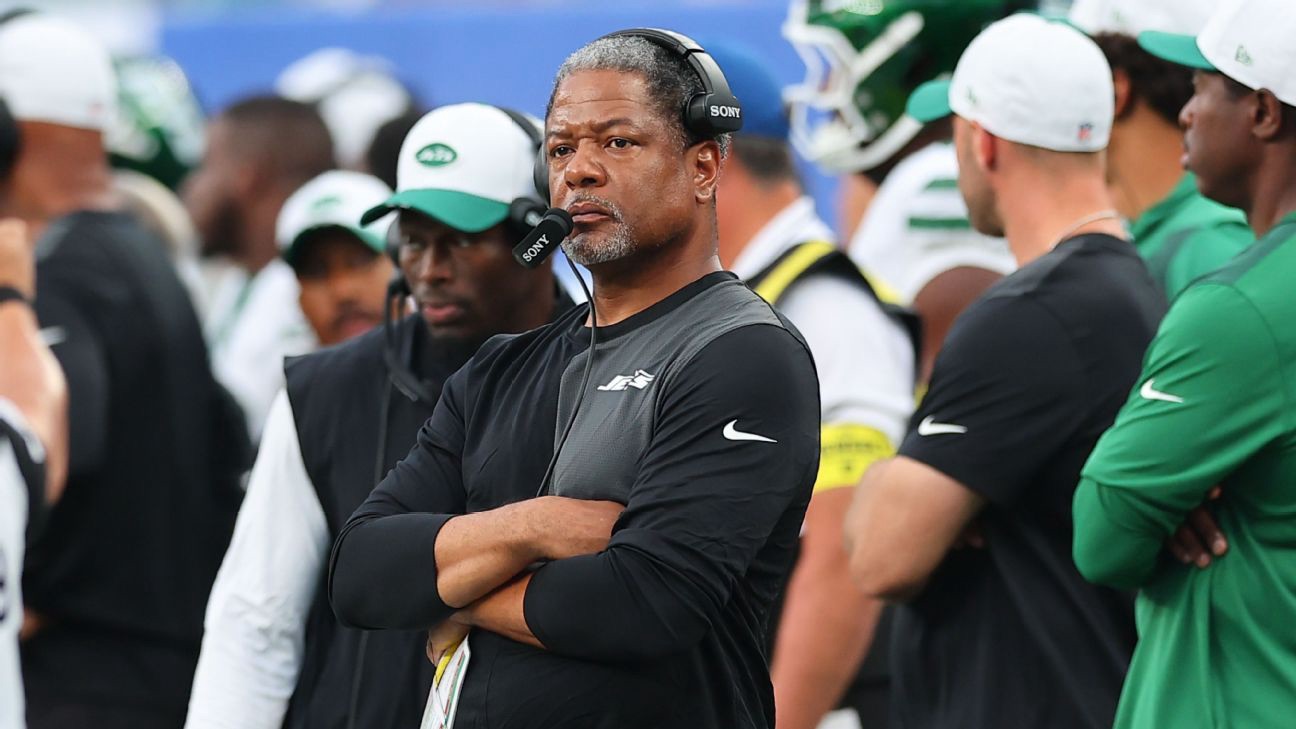
Amid one of the most disappointing defensive campaigns the team has ever endured, the New York Jets have fired defensive coordinator Steve Wilks, ending his tenure after just 14 games. The decision was made Monday, one day after a blowout 48–20 loss to the Jacksonville Jaguars.
Head coach Aaron Glenn, making his first major staff change, appointed defensive backs coach and passing game coordinator Chris Harris as interim defensive coordinator. Harris will handle play-calling duties for the final three games of the season, with Glenn—known for his defensive background—assisting during weekly game preparation.
Glenn explained the move by citing a lack of progress on defense. He said the expected improvement was not evident from week to week, prompting the decision to make a change in the best interest of the organization. Glenn added that ongoing evaluation of all aspects of the team is part of his responsibility as head coach.
The firing followed a brutal performance against Jacksonville, where the Jets allowed touchdowns on eight of the Jaguars’ first nine possessions. New York has surrendered 82 points over the past two games, its worst two-game defensive stretch since 2021. The Jets now sit at 3–11.
After ranking among the NFL’s top four defenses in yards allowed from 2022 through 2024, the Jets have sharply regressed this season. They rank 30th in scoring defense, 20th in total yards allowed, and 28th in expected points added (EPA).
Perhaps most alarming is the lack of takeaways. The Jets have recorded just two takeaways all season and have yet to intercept a pass. On Sunday, they tied the 2024 San Francisco 49ers for the longest interception drought in NFL history at 14 consecutive games.
The decision to dismiss Wilks came swiftly. Just a week earlier, Glenn had expressed confidence in him and indicated there were no plans to remove his play-calling duties. However, Glenn said he made the final call late Sunday night and informed Wilks Monday morning.
Glenn emphasized his desire for consistency in structure, performance, and team culture, noting that those standards were not being met. The Jets are currently allowing 28.3 points per game and are on pace to give up 482 points this season, which would be the second-highest total in franchise history.
The season has been another crushing disappointment for the Jets, who have now missed the playoffs for 15 consecutive years—the longest active postseason drought in North American professional sports. It also marks their sixth straight season with double-digit losses. Despite the struggles, Glenn’s job is believed to be safe.
Under Wilks, the Jets employed a blitz-heavy defensive approach, but the pass rush failed to deliver. Glenn said he was furious with Sunday’s performance, during which the defense failed to record a single sack and managed only two quarterback hits. Poor tackling and frequent breakdowns in coverage plagued the unit throughout the season, often leaving receivers wide open.
The frustration was evident after the Jaguars game, as several defensive leaders declined to speak with reporters. Linebacker Quincy Williams summed up the mood by saying he had “nothing positive to say.”
Wilks took over a defense that returned nine starters from the previous season, though three—cornerback Sauce Gardner, defensive tackle Quinnen Williams, and nickelback Michael Carter II—were traded earlier in the year. While the defense showed modest improvement before the Nov. 4 trade deadline, it regressed significantly afterward as the team shifted into rebuilding mode and integrated rookies and new players.
Wilks, 56, acknowledged last week that the defense had been inconsistent and accepted full responsibility. A former head coach with the Arizona Cardinals and an interim head coach with the Carolina Panthers, Wilks was one of Glenn’s first hires. This marked his sixth consecutive coaching stint that lasted just one season.
In the spring, Wilks described the defensive scheme as a collaboration between his system and Glenn’s. However, Glenn later noted that he allowed Wilks to fully run his own system—a comment that hinted at growing dissatisfaction. Initially, Wilks was expected to coach through the final three games before being evaluated, but Sunday’s loss accelerated that timeline.
Chris Harris, 43, a former NFL safety, will now lead the defense despite never having called plays at the NFL level. This is his fifth coaching stop. Defensive tackle Harrison Phillips expressed trust in Glenn’s leadership, calling the situation difficult but acknowledging that the team’s performance had not met expectations.
The Jets will travel next week to face the New Orleans Saints. Glenn declined to name a starting quarterback but praised rookie Brady Cook and is expected to stick with him moving forward.